June 8, 2026/5 min read
Mastering the Art of Texturizing and Thinning Shears
Thinning and texturizing shears can make a haircut look soft, balanced, and modern. Used poorly, they can create frizz, gaps, weak ends, or a shape that…
Thinning and texturizing shears can make a haircut look soft, balanced, and modern. Used poorly, they can create frizz, gaps, weak ends, or a shape that collapses after the client leaves. The difference is not magic. It is tool choice, section control, and restraint.
Thinning versus texturizing
Thinning shears are generally used to reduce bulk and blend density. Texturizing shears are used to create movement, separation, and softness. The terms overlap in the industry, but the goal should always be clear before you cut.
Ask what you are trying to change: weight, line, movement, blend, or finish. If you cannot answer that question, do not close the shear yet.
Professional texture is intentional. Random cuts may remove hair, but they rarely improve the haircut.
Tooth count changes the result
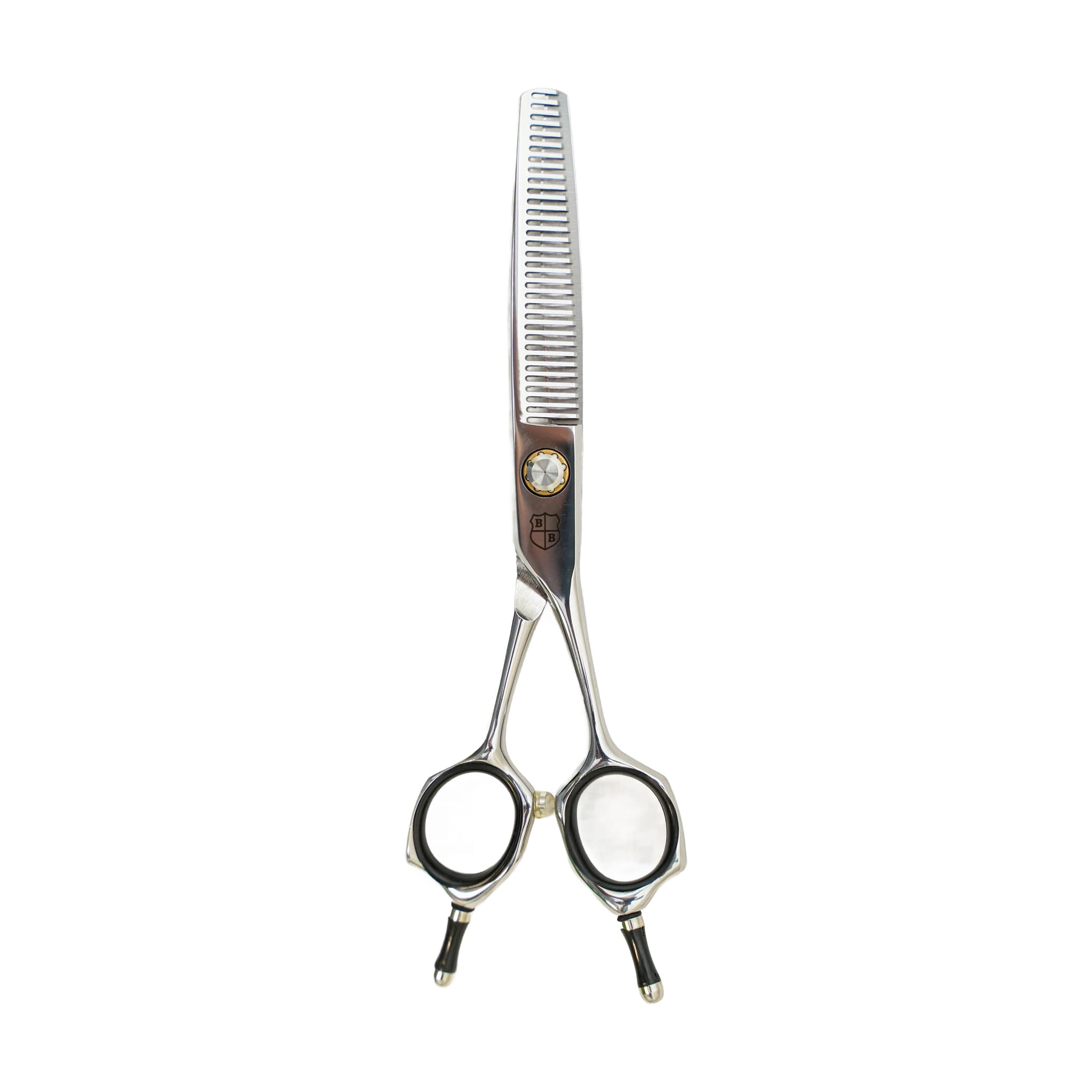
A shear with more teeth usually removes less hair per closure and creates a softer blend. A shear with fewer or wider teeth removes more hair and creates stronger texture.
That is why a 32T shear behaves differently from a 10T chunker. Both can be useful, but they should not be used the same way.
Choose the tooth count based on the effect you want. Do not use a powerful chunker for subtle blending unless you have the control to do it.
Placement matters more than people think
Most mistakes come from poor placement. Removing too much hair near the scalp can create short interior pieces that push up or frizz. Removing too much near the ends can make the perimeter look thin or weak.
Work deliberately. Take clean sections, keep track of where you have already cut, and step back before making another pass.
Comb through after every cut. The hair will show you whether more texture is needed.
Avoid over-thinning
Over-thinning usually happens when a stylist tries to fix bulk without changing structure. Sometimes the better answer is a stronger layer, a different sectioning pattern, or a cleaner baseline.
Use thinning shears as a refinement tool, not a substitute for the haircut itself. If the shape is wrong, fix the shape first.
Fine hair, curly hair, and damaged hair require extra restraint because the mistakes are more visible.
Build a practical texturizing kit
A practical kit may include a straight cutting shear, a 25T or 32T thinning shear, and a stronger texturizing or chunker shear for specific work.
Compare options in the Blacksmith Blades thinning shears collection. For a stronger texture tool, review the VG10 10T thinning/texturizing/chunker shear.
Your kit should match the hair you actually cut. Thick, dense hair needs different tools than fine, fragile hair.
Quick Buying Guide
- Use higher tooth counts for softer blending.
- Use lower tooth counts or chunkers for stronger texture.
- Do not thin randomly near the scalp.
- Comb through after every pass.
- Build the haircut first; refine texture second.
Frequently Asked Questions
Can thinning shears ruin a haircut?
Yes, if they are overused or used in the wrong place. They can create weak ends, gaps, or frizz.
What tooth count should I start with?
A 32T thinning shear is a practical, versatile starting point for controlled blending.
Are chunkers only for thick hair?
They are most useful on dense hair or where stronger texture is needed, but they should be used carefully.
Texture should be intentional. Remove weight where the haircut needs it, not everywhere the hair feels heavy.
How To Decide Where To Remove Weight
Before using a thinning, texturizing, or chunker shear, look at the haircut from a distance. Identify where the shape is heavy and where the hair needs to stay strong. Removing weight without a plan can weaken the perimeter, create frizz, or leave visible holes.
Use the tool only where it improves the shape. That may be through the interior, around a bulky transition, or in a dense area that needs movement. It should not be everywhere.
The best thinning work is often invisible. The client sees a better shape and softer movement, not obvious chunks missing from the haircut.
Hair Type Changes the Technique
Fine hair needs restraint because it can look thin quickly. Curly hair needs careful placement because short interior pieces can expand and create frizz. Thick, dense hair may tolerate stronger texture, but even then the stylist should work in controlled passes.
Damaged hair also needs caution. Removing too much weight from fragile ends can make the hair look weaker. Sometimes the better answer is a cleaner cut or treatment plan rather than more thinning.
Good stylists adapt the tool to the hair type. They do not use the same thinning pattern on every client.
How To Maintain Thinning and Texturizing Shears
Thinning and texturizing shears collect hair and product between the teeth. If that buildup is ignored, the shear can start to drag or feel inconsistent. Cleaning between uses is especially important for these tools.
Oil the pivot regularly and store the shear where the teeth cannot be damaged. A nicked tooth can change the way the tool performs and may cause pulling.
When the shear starts to snag, pull, or feel rough, use professional sharpening. These tools require careful service because the teeth and cutting edge must work together.