
November 13, 2026/2 min read
Fine Hair and Weight Removal: When to Thin and When to Leave It Alone
Before you pick up a thinning shear on fine hair, name the problem you are solving. This guide covers when weight removal earns its place and how the 440C Orchid Blade Thinning Shears fit in.
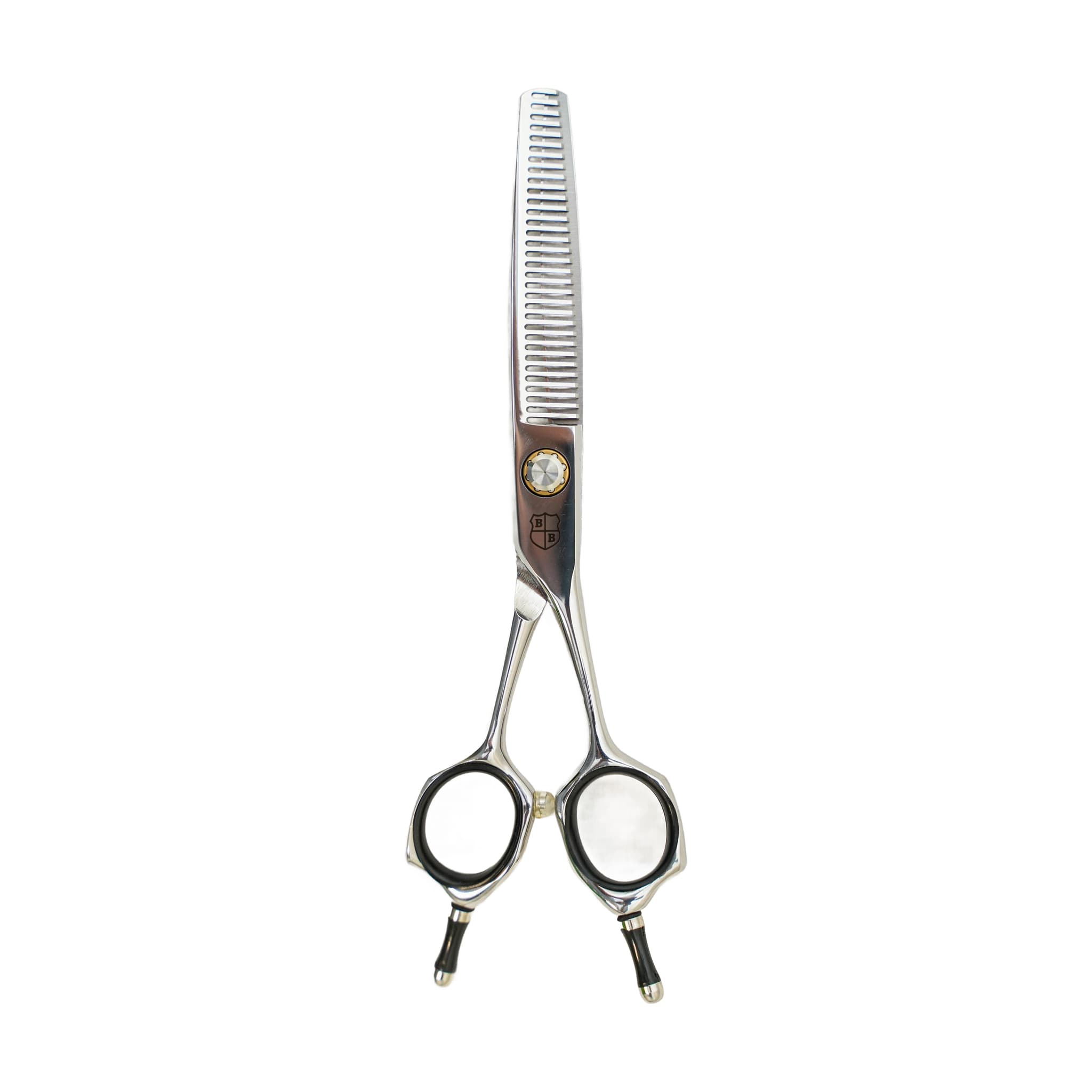
Name the problem before you thin
A thinning shear closes easily and is hard to reverse, so the result depends on your restraint. A haircut that merely feels heavy is not enough reason to pick one up. First decide what the shear is for: reducing density, softening a line, blending a transition, or creating movement.
If you cannot state that purpose, step back and evaluate the haircut before cutting anything more. Look at it from a distance and mark which areas are truly heavy and which areas need to stay strong.
Why fine hair calls for extra restraint
Fine hair can look thin quickly, so there is little room for taking out more than you need. Removing too much weight from fragile ends can make the hair look weaker rather than lighter. Thick hair may tolerate stronger texture, though it still calls for controlled passes, and curly hair raises questions of placement. Because hair types differ, there is no single thinning pattern that suits every client.
Weight removal without a plan can weaken the perimeter, create frizz, or leave visible holes. Texturizing also cannot repair a poorly built shape, so build the shape first. Sometimes the better answer for a client is a cleaner cut or a treatment plan instead of more thinning.
When thinning is justified, keep it targeted
Use the shear only where it improves the shape, such as an interior area, a bulky transition, or a dense section that needs movement. The 440C Orchid Blade Thinning Shears come in after the main cut, to blend a heavy area or soften an edge, and a few controlled passes let you reassess before you remove more hair.
The Orchid shears belong to the 440C Professional Line in the thinning shear category. They come with left-handed or right-handed handle options, so you can choose the one that matches your cutting hand.
Work in a loop and know when to stop
- Work in clean sections.
- Comb through after each pass.
- Judge the shape before you make another cut, since hair can look different once it settles.
- Use fewer cuts and comb often, and stop once the shape improves.
Visible chunks, holes, or weak-looking ends suggest the tool has been overused. Having the shear in your hand is never a reason to keep cutting.
Next step
With fine hair, treat thinning as an exception that you justify, not a default finishing step. If your assessment shows a heavy area worth blending after the main cut, you can view the 440C Orchid Blade Thinning Shears and its handle options on the product page.
Related resources
Sources
- 440C Orchid Blade Thinning Shears - Blacksmith Blades
- How to Use Texturizing and Thinning Shears Like a Professional - Blacksmith Blades