November 12, 2026/3 min read
How to Decide on Another Pass With Your 440C Ergonomic Blade Thinning Shears
A pass-by-pass way to finish with thinning shears: set the shape, name the job, work in small sections, comb through, and judge whether you continue, stop, or step back.
Build the shape first, then name the job for your thinning shear
A thinning shear has a different job from your straight cutting shear. You bring the 440C Ergonomic Blade Thinning Shears in once the main shape exists, either to soften a line or to remove weight. They work alongside a straight shear, finishing selected sections after the haircut shape is set.
Texturizing cannot repair a poorly built shape, so settle the structure before you reach for the thinning shear. Then name what you want from it: reducing density, softening a line, blending a transition, or creating movement. Each goal calls for different placement, and sometimes a different tool. Heaviness alone is not a reason to pick up the shear.
Map the weight and work one small section at a time
Before you cut, look at the haircut from a distance. Find the heavy areas, and also the areas that need to keep their strength. Use the thinning shear only where it improves the shape, for example in the interior, at a bulky transition, or in a dense area that needs movement.
Work in small, clean sections. Clean sectioning gives you control and helps keep you from recutting an area without realizing it. Take one pass in the section, then comb through it before you decide anything else.
Comb through, then continue, stop, or step back
After each pass, comb through the section and evaluate the shape before you decide on another cut. Hair can look different once it settles back into position, which is why the judgment belongs after the comb-through. Favor fewer cuts and comb through often.
- Take another pass only if, after combing through, the shape still calls for it against the purpose you named.
- Stop once the shape improves. Do not keep cutting just because the shear is in your hand.
- Step back if your purpose is unclear, and evaluate the whole haircut before you cut anything more.
- Treat visible chunks, holes, or weak ends as a sign the shear was probably overused.
Removing weight without a plan can weaken the perimeter, create frizz, or leave visible holes.
Adjust your restraint for fine, thick, and fragile hair
Fine hair can look thin quickly, so it needs restraint from you. For fine hair in particular, work in small sections, comb through, and check the result before you take another pass.
Thick, dense hair may tolerate stronger texture, but you still work in controlled passes. Where the ends are fragile, removing too much weight can make the hair look weaker, and a cleaner cut or a treatment plan may serve your client better than more thinning.
Aim for movement and balance rather than the maximum amount of hair removed. Good thinning is often invisible: your client sees a better shape and softer movement, not missing chunks.
Choosing your 440C Ergonomic Blade Thinning Shears
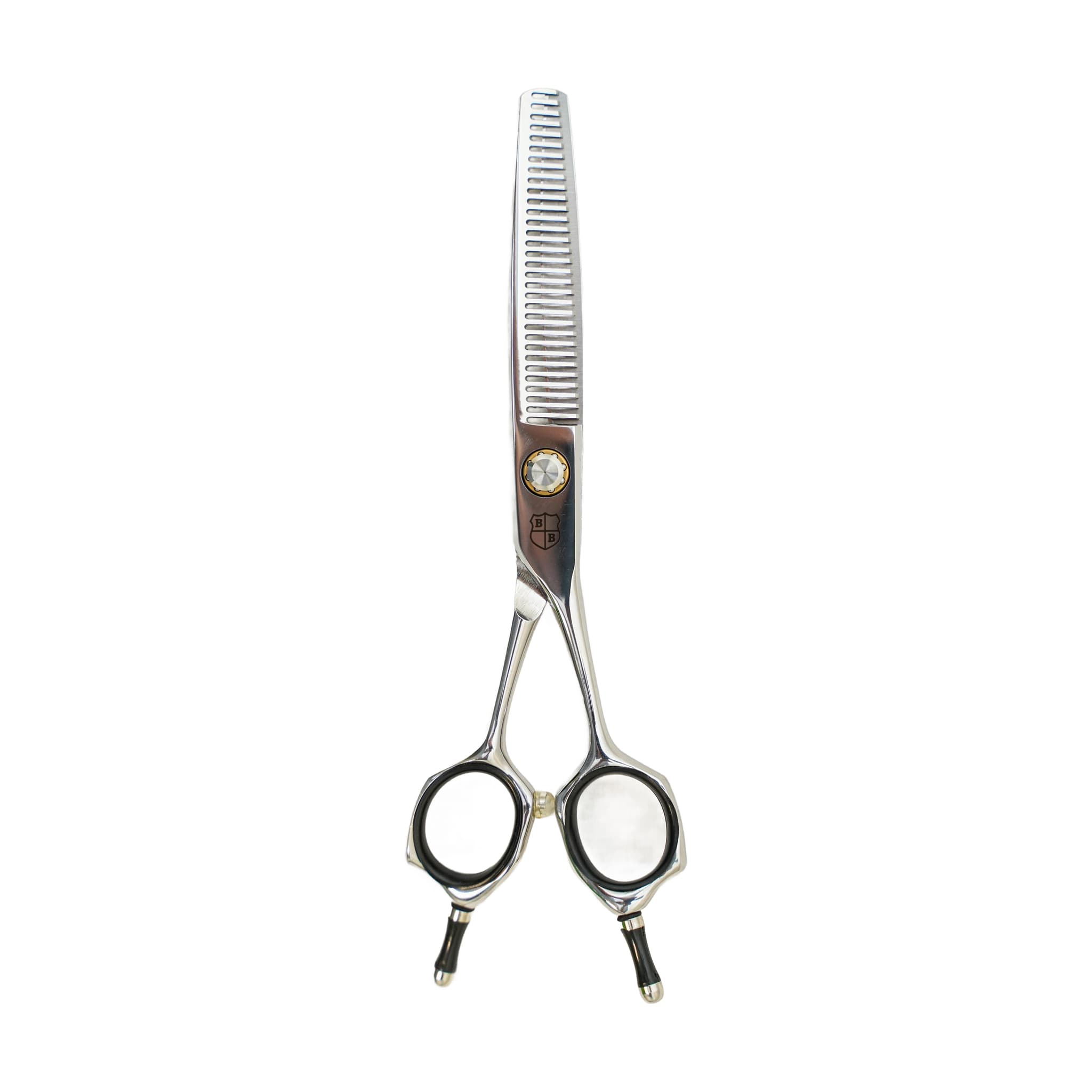
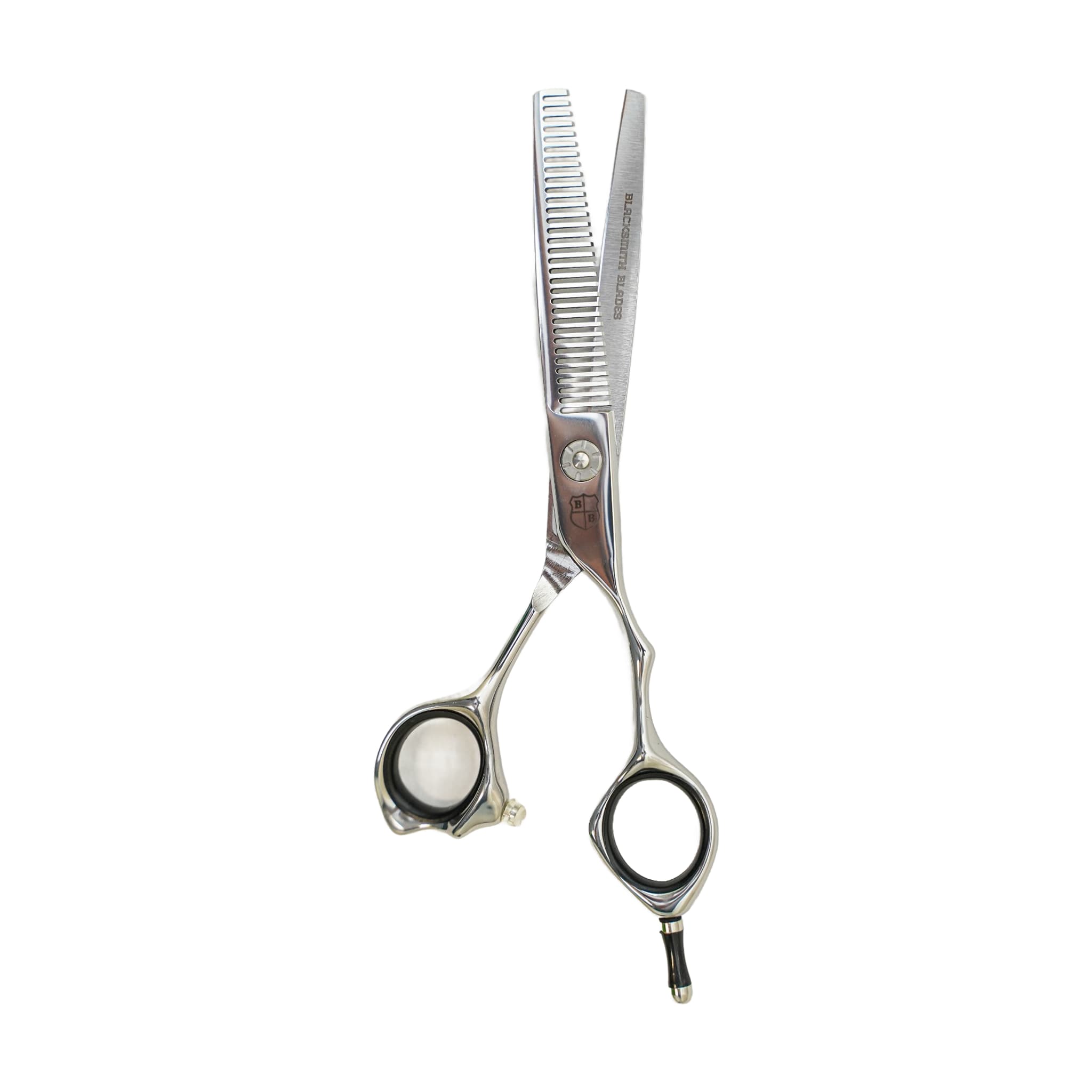
The 440C Ergonomic Blade Thinning Shears are made from 440C steel with an ergonomic handle and are intended for salon and barbershop thinning work. The model comes in left-handed and right-handed options. If you want a thinning shear for the finishing role described here, view the 440C Ergonomic Blade Thinning Shears and pick the handle option that suits your hand.
Related resources
Sources
- 440C Ergonomic Blade Thinning Shears - Blacksmith Blades
- How to Use Texturizing and Thinning Shears Like a Professional - Blacksmith Blades